
How Many Days Do You Need in Mexico City to Climb Iztaccíhuatl?
A climber from Seattle wrote to us last week with the question we get more than any other: "What itinerary would you recommend given our Saturday arrival and Wednesday departure?"
The climb itself is easy to place. Iztaccíhuatl is two days from Mexico City. What decides how those two days go is everything around them: how many nights you've slept in the city first, whether you've had a day higher up, and how close your flight sits to the morning you come down.
Below is how we plan it, and, more interesting, why. "It's what's recommended" isn't a reason, so we're going to show you what your body is actually doing up there.
The short version. Izta takes two days: we pick you up in the morning of day one and drop you back at your hotel in the afternoon of day two. Before it, we suggest at least two nights in Mexico City and a warm-up day on Ajusco or La Malinche, because your body needs a few days to learn to breathe for altitude, however fit you are. After it, leave a free day before your flight. The park doesn't take new entries on Mondays, so the climb can start on Sunday and come down on Monday, but never start on a Monday. If your trip is short, move your arrival earlier, not your departure later.
01 · The climb
What the two days actually look like
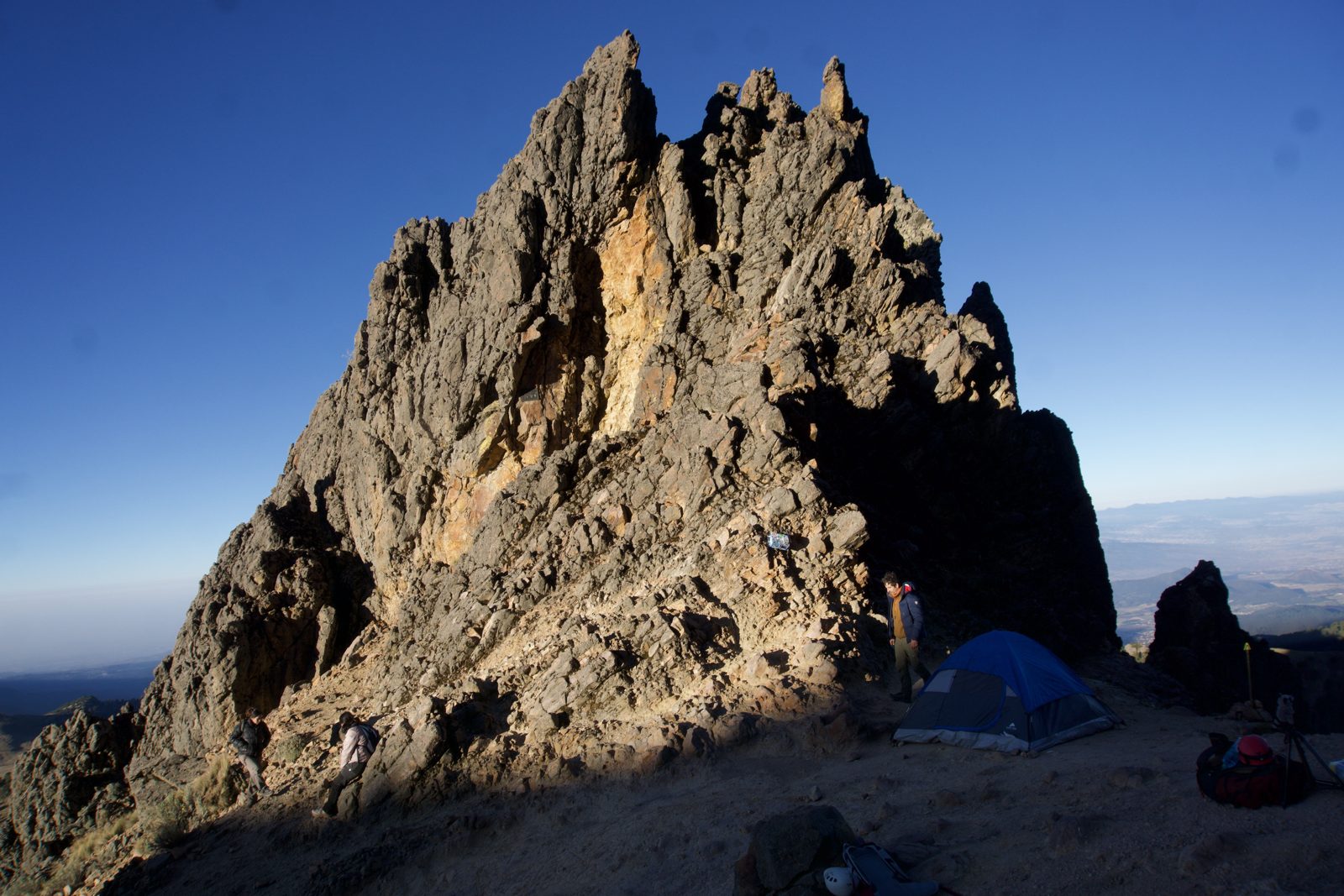
On day one we pick you up at your accommodation in Mexico City and drive east toward Amecameca, where you eat a real lunch, the last hot meal at low altitude. After the park ranger check-in at Paso de Cortés we drive to La Joya, the trailhead and basecamp at 3,930 m. Tents go up, and in the late afternoon there's a short acclimatization walk up to 4,200 to 4,400 m and back down, which also lets your guide watch how you're moving at altitude. Dinner, a route briefing, and lights out early.
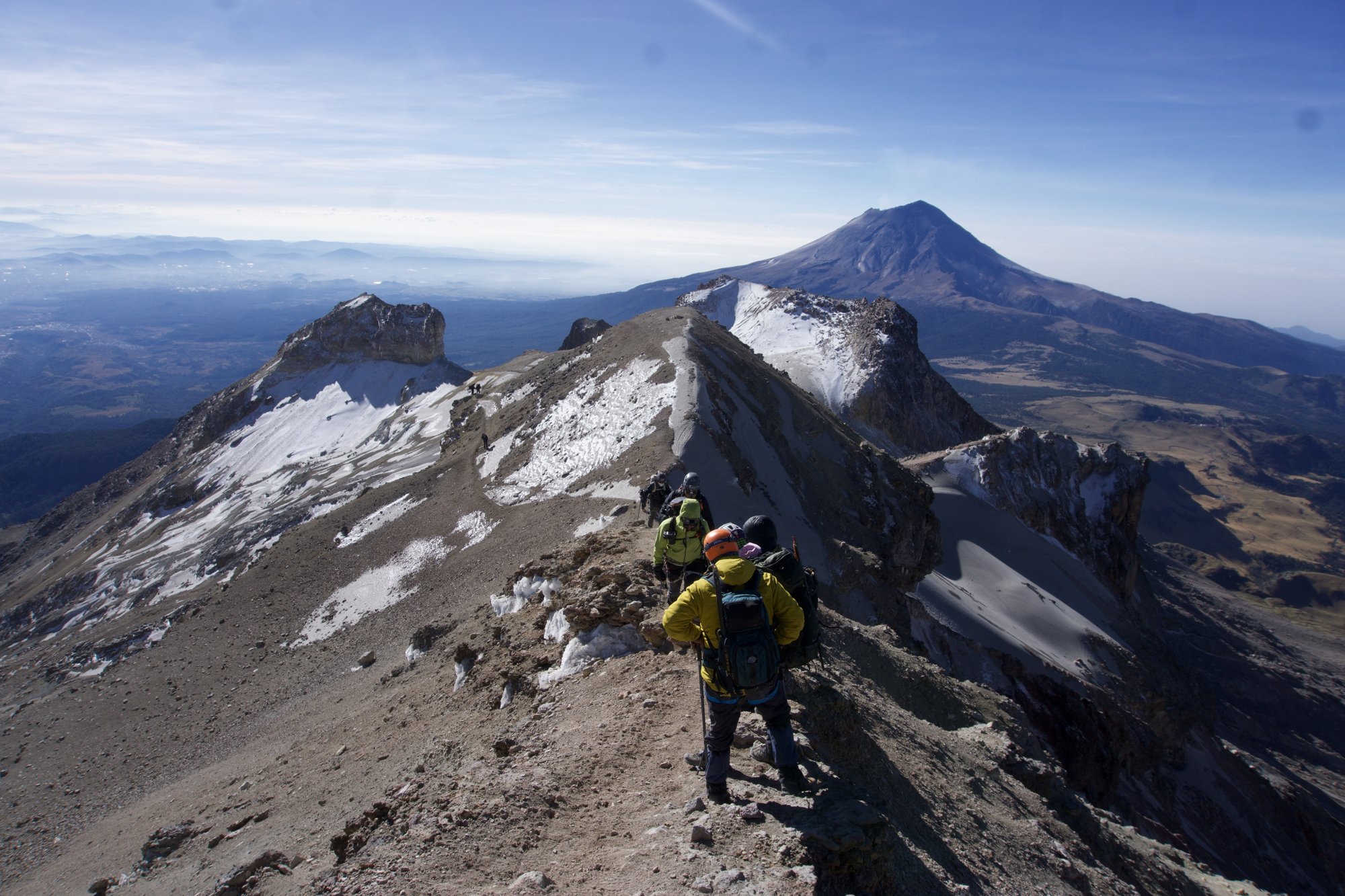
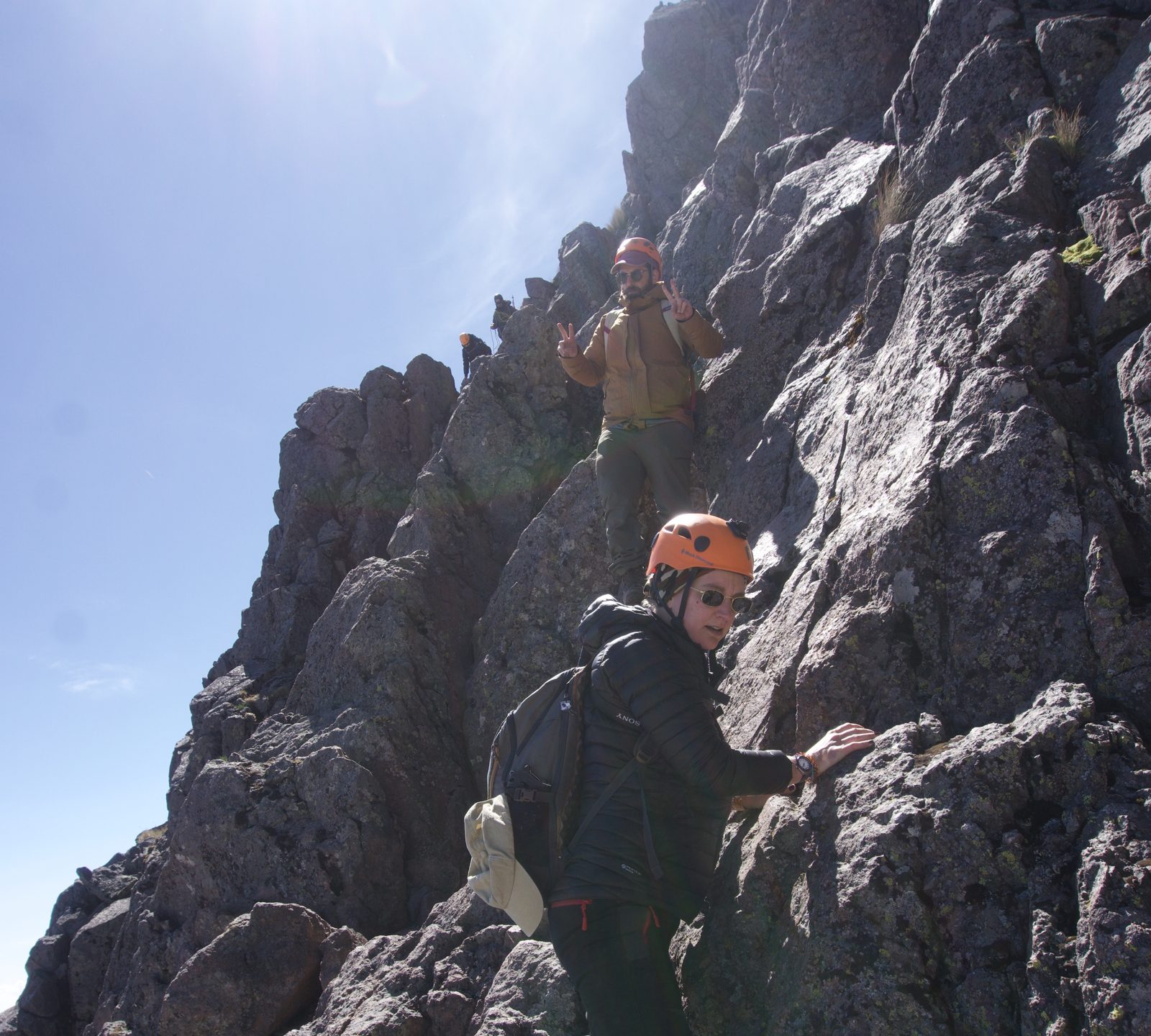
Wake-up is at midnight. The summit push from La Joya to the top at 5,230 m is 8 to 10 hours, along the ridges that give the mountain its Sleeping Woman silhouette: knees, belly, chest, head. Sunrise usually catches you somewhere around the belly, with Popocatépetl steaming across the pass. After the summit it's back to camp, pack up, a celebration lunch, and the drive home.
So the climb is two calendar days, and the second one is long. You'll be in your hotel by the afternoon, tired in the good way, and not in any shape for an airport that same evening.
02 · Your body
What happens when you go up
Start with the air. Up high it has the same share of oxygen as at home, 21 percent. There's just less air, so every breath brings in fewer oxygen molecules.
How much air is in each breath
Air pressure compared with sea level, approximate, from the standard atmosphere.5 Oxygen per breath drops in step with it.
Your body has two sensors that run your breathing, and up high they start to argue. This is the part almost nobody explains, and it's the whole reason behind the days in the city.
First minutes
The neck sensor hits the accelerator
You have a sensor on each side of your neck, where the carotid artery splits, smaller than a grain of rice. It tastes the blood heading to your brain, notices the oxygen is low, and tells you to breathe harder.3 So far, so good.
Same hour
The brain sensor hits the brake
Every extra breath out takes CO₂ with it, and CO₂ is what keeps your blood at the right acidity. Your body protects that balance above almost anything, because your nerves, heart and muscles only work inside a narrow range. A second sensor, in your brainstem, watches that balance, sees it slipping, and says slow down. One sensor says breathe more, the other says stop. You end up breathing more than at home, but less than you need.3
From day one
The kidneys step in
They start flushing bicarbonate, the stuff that balances the acid, out in your urine. With less of it, the balance comes back even with less CO₂, and the brain sensor eases off the brake. In one study of climbers driven fast to 3,800 m, the kidneys had blood acidity back to normal within about a day.3 It's also part of why you pee more up high.
Days three to five
Your breathing settles
With the brake off, your breathing keeps climbing and your oxygen improves. Most of that happens over the first three to five days.1 Two nights in the city don't finish the job. They give it a head start before you sleep at 3,930 m.
Night is when it shows
Asleep, the brake wins more often. Above about 2,700 m almost everyone breathes in cycles at night: a few deep breaths, a pause, and again, with oxygen dropping in the pauses.1 That's the bad night and the morning headache. Altitude sickness usually starts 2 to 12 hours after you arrive somewhere new and higher, often during or after that first night.1 It's why medical guidelines care more about where you sleep than how high you hike, and why, once you're above 3,000 m, they ask you to raise your sleeping altitude by no more than 500 m a day.12 Going from the city to La Joya is a 1,690 m jump in one day. We can't make that jump smaller, so we make you readier for it.
And none of this cares how fit you are
Marathon runners and people who never train run on the same kidney clock. The CDC puts it in one line: training and physical fitness do not affect your risk of altitude illness.1 Fitness is what gets you up a summit day of 8 to 10 hours, and it matters just as much. It just doesn't make the first nights at altitude any shorter.
03 · What we suggest
Why the nights in the city matter
Here's what all of that turns into, for everyone coming from sea level:
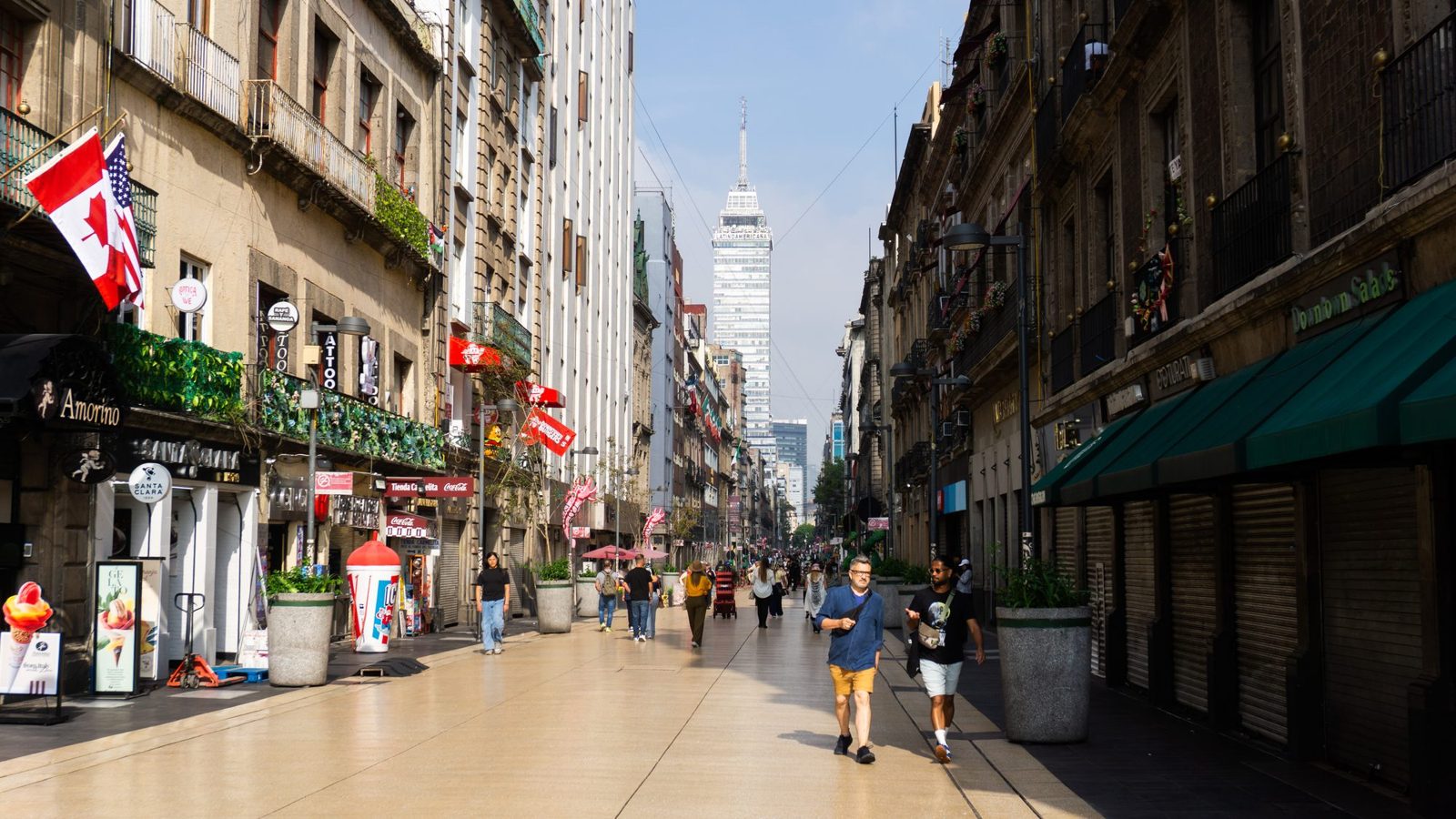
- At least two nights in Mexico City before the climb. That's your kidneys' head start, at 2,240 m.6 Walk the city, eat well, sleep. Those days aren't wasted, they're part of the plan. We wrote about how to spend them in What to Do in Mexico City While You Acclimatize.
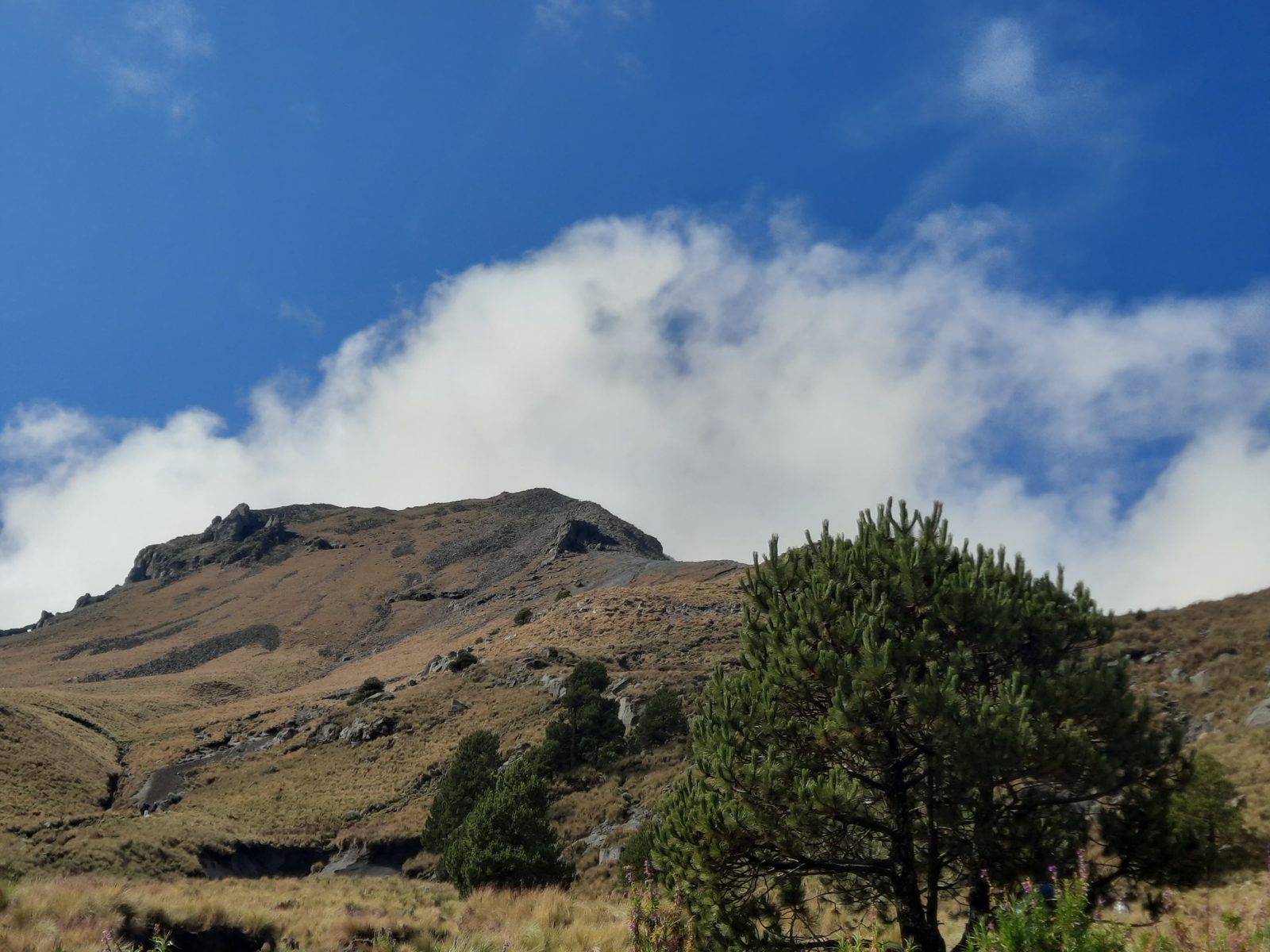
- A warm-up day higher up. Ajusco (3,880 m) is half a day and 45 minutes from the city. La Malinche (4,461 m) is a full day and a real summit. You go high in the day and sleep low that night, which mountain medicine says may help acclimatization,4 and it shows you and your guide how you handle altitude before you sleep at 3,930 m.
- A conversation with your doctor about acetazolamide (Diamox). It makes your kidneys flush bicarbonate faster, which takes the brake off your breathing sooner, especially at night.1 That's why we suggest the conversation to everyone flying in from sea level. We don't prescribe it, your doctor decides.
For the record, the medical guidelines would like even more time than this. They describe two to three nights at 2,450 to 2,750 m as markedly protective,1 and Mexico City sits a little below that. Two nights plus a warm-up is the honest minimum, and our own Izta page says what we see on the mountain: most climbers who've spent a few days in Mexico City and done a warm-up like Malinche or Ajusco will summit.
04 · The calendar
The Monday rule
The national park doesn't take new entries on Mondays. It sounds small until it lands on your trip.
Sunday up, Monday down
Works. You enter on Sunday and you're already in the park on Monday.
Monday up, Tuesday down
Not possible. No new entries on Mondays, so the climb can't start that day.
A Saturday arrival plus a free Sunday points you straight at a Monday start, the one day that doesn't work. Most of the itinerary questions we get are really this rule in disguise.
05 · The plan
Six days, climb high and sleep low
This is the plan we suggest, Friday to Wednesday. Watch the dark line: that's where you sleep. It stays low until the one night at camp.
| Time in Mexico | Plan | How it sits |
|---|---|---|
| The one we suggest 6 days, e.g. Friday to Wednesday | Fri land · Sat Ajusco or La Malinche · Sun and Mon Izta · Tue free · Wed fly | Two nights in the city, a warm-up, the climb, a free day before the flight |
| Short 5 days, Saturday to Wednesday | Sat land · Sun and Mon Izta · Tue free · Wed fly | It works, and it's the minimum: one night in the city before camp and no warm-up |
| Longer 7 days or more | Add Malinche and a rest day before Izta, or put a second mountain after it | More time up high, and room for the weather |
Back to our climber from Seattle. With a Saturday landing and a Wednesday flight, the climb goes Sunday and Monday and Tuesday stays free, because a Monday start isn't possible and Wednesday is the flight. That's the short plan, and it's a real option. If you're coming from sea level and can change one thing, land on Friday instead. Two nights in the city and a morning on Ajusco do more for summit day than any extra day you could add at the end.
Whichever plan you pick, be back in the city the night before your flight. It keeps a long summit day from ever touching your trip home.
06 · Next step
Send us your dates
Tell us the day you land and the day you fly, and we'll send back the plan that fits, with the warm-up and the Izta dates already checked against the Monday rule.
Trip details: Iztaccíhuatl, 2-day summit · Ajusco · La Malinche
Sources
Where this comes from
- Centers for Disease Control and Prevention. High-Altitude Travel and Altitude Illness. CDC Yellow Book.
- Luks AM, et al. Wilderness Medical Society Clinical Practice Guidelines for the Prevention, Diagnosis, and Treatment of Acute Altitude Illness: 2024 Update. Wilderness & Environmental Medicine, 2024.
- Bird JD, et al. Time course and magnitude of ventilatory and renal acid-base acclimatization following rapid ascent to and residence at 3,800 m over nine days. Journal of Applied Physiology, 2021.
- UIAA Medical Commission. Factsheet on Altitude Sickness.
- Our calculation from the International Standard Atmosphere. Real pressure on a given day varies with weather and latitude.
- Government of Mexico City. About Mexico City (altitude 2,240 m).
We're mountain guides, not doctors. If you have a medical condition, or questions about altitude medicine, talk to your doctor before the trip.

Prefer to Fill Out a Form?
We'll get back to you within 24 hours